

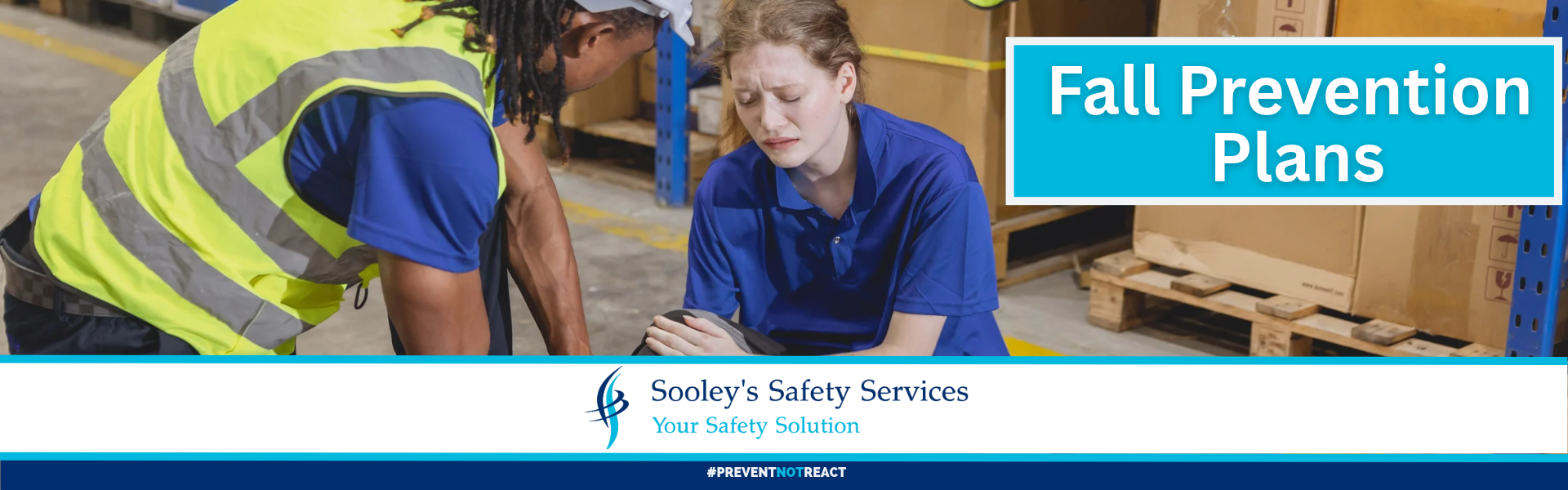
Fall protection planning can help to eliminate the hazards or control the risks associated with working near openings or at heights. Working at heights is any work where a person could fall a distance and be injured.
Falling from heights is a leading cause of workplace injury and death. Having a plan in place to help prevent falls from heights from happening is key. The plan should include thorough training for workers on the use of protective equipment. Should a fall happen, workers need to know who to alert to initiate a rescue and how to ensure emergency services will be dispatched in a timely manner. The following link provides specific requirements by jurisdiction for fall protection:
The Importance of Fall Protection Plans
Employers are typically required to have a fall protection plan in place wherever employees are working at a height of three metres or more. The plan outlines the policy and procedures involved in assembling, maintaining, inspecting, using and dismantling equipment such as ladders, scaffolding, elevated work surfaces, elevating work platforms, fixed suspended work platforms, swing stages, boatswain’s chairs, aerial devices, or suspended equipment. Fall protection plans must be specific to each site where workers are at heights. There is no one size fits all program. Requirements and equipment used will change with each workplace, job or site. Plans may also be required when performing certain work at heights less than three metres.
Workplace Roles and Responsibilities
Employers are responsible for developing a thorough fall protection plan, providing fall and personal protection equipment that is in good working order and ensuring employees at all levels have through training. Training should include how to identify and alert supervisors to hazards, the inspection and maintenance of protective equipment and how to use it according to the manufacturer’s instructions. Employers must also provide training for workers on how to initiate a rescue plan in the event of an emergency, as well as specific training for workers designated to lead rescues.
An important part of a supervisor’s role is ensuring workers follow all regulations for the workplace’s jurisdiction. They should have thorough knowledge of their workplace’s fall protection policy and procedures so they can keep workers informed about fall hazards, the use and wear of fall protection equipment and how to work safely at heights. When workers identify hazards or have safety concerns about specific situations, the supervisor has a duty to escalate those concerns to the employer and to pause work until concerns have been addressed.
Workers’ active participation in fall protection education and training will help them to identify hazards, use, inspect and maintain their personal protective and fall protection equipment and know what to do in the event of an emergency. If they haven’t been thoroughly prepared to work at heights or there is imminent danger, workers have the right to refuse unsafe work.
Fall Protection Plans
Hazard Assessment
Look for all areas or situations where there is a risk of falling before any work begins.
- Are there any areas where people may fall during tasks they are expected to do?
- From a height of 3 m (10 ft)
- Into operating machinery
- Into water or other liquid
- Into or onto a hazardous substance or object
- Through an opening in a work surface
- Are there controls in place to eliminate or reduce the likelihood of falls?
- Are workers trained to recognize new or previously unrecognized fall hazards and report them immediately?
- Do workers understand the protective measures taken to reduce falls (e.g., guardrails, safety nets, etc.)?
- Is all equipment used by workers stable and in good repair, including guardrails, ladders and scaffolding?
- Are floors in work areas in a clean and dry condition?
- Are workers educated and trained to understand how and when to use protective equipment safely?
- Is personal protective equipment prescribed, available, maintained in good condition and used as instructed?
Collaboration
Develop the fall protection plan by involving those individuals with direct experience and whose work will be most impacted and get input from supervisors and workers whose work involves fall hazards. Involve the Joint Health and Safety Committee or Health and Safety Representative during the development. This ensures every aspect is covered and is easier to get cooperation with implementing the plan.
Contents
A site-specific fall protection plan will incorporate many items, including:
- Site location (address, description, work area, tasks)
- Hazard Assessment reviewing site-specific fall hazards (e.g., maximum height(s), roof slope if applicable, proximity to power lines, ground cover, etc.)
- Type of fall protection to be used, including anchor points and clearance requirements
- Equipment inspection
- Any other requirements before beginning work (e.g., presence of first aid or rescue personnel, other safety equipment, barricades, etc.)
- PPE selection, use, inspection, maintenance, cleaning requirements and removal
- Training requirements (working at heights, PPE, working safely on equipment)
- Emergency and rescue procedures (prevent the worker from hitting the ground, material, equipment, or lower level of a structure, workers swinging side to side)
- Worker sign off
Training
Workers are required to have specific training based on Legislation and Regulations for that jurisdiction. For more information, the following link provides a summary of the current requirements, courtesy of CCOHS:
https://www.ccohs.ca/oshanswers/hsprograms/fall%20protection_leg_training_requirements.html
In Ontario, Regulation 297/13 – The Occupational Health and Safety Awareness and Training regulation, outlines the requirements of a working at heights training program which must be approved by the Chief Prevention Officer of the Ministry of Labour, Training and Skills Development.
Section 26.2 of Regulation 213/91 – Construction Projects require the employer to make sure the worker who may use a fall protection system is trained in its use and is given oral and written instructions by a competent person. Records must be prepared by the person who provides the training and kept by the employer.
Other regulations including Industrial Establishments and Window Cleaning require when a worker is required to wear or use protective equipment, clothing, or device, they must be instructed and trained in its care and use before wearing or using.
Rescue Plans
Often after a fall is arrested, the worker remains suspended in the air and will need to be rescued by others. In other situations, the worker could have injuries that require first-aid. A rescue plan will detail how to return fallen workers to a place of safety, while keeping rescuers safe. Leaving a worker suspended for a long period of time can be dangerous to their health and safety.
Everyone must understand their role and what they need to do after a fall. Coordinate with emergency services in your area for any potential assistance. Designated rescuers must be adequately trained and have easy access to all the equipment they need to effectively rescue others safely and as quickly as possible.
A rescue plan should:
- Designate, educate and train those who will conduct the rescue.
- Be written and posted before work begins.
- Identify on-site first aid personnel and include all contact information.
- Outline the necessary first aid equipment needed on site.
- Provide contact information for local emergency medical and fire services, if needed.
- Identify all emergency exits and access routes within the worksite.
- Identify all available systems of communications. Make sure there is a backup system for your primary mode of communication.
- Develop procedures for rescue, including rope rescue, retrieval lines, location of anchor points, etc.
- Develop procedures for using any powered mobile equipment, mechanical hoisting systems or elevating devices that may be required during the rescue.
- Detail procedures necessary to clear and secure work areas while they remain unsafe or if any ongoing work would obstruct a rescue.
- Provide education and training for workers involved, so they understand what they must do after a fall and during a recovery operation.
- Review and amend the rescue plan on a regular schedule, after relevant changes to the worksite and after all rescues or related incidents
Fall protection plans will help save lives. The plans help coordinate different parties to be on the same page when trying to work safely and to prevent serious accidents and even fatalities. If you have any questions or require further information, please feel free to contact me by clicking here.
Remember!
As the employer, you must protect your workers and maintain your due diligence to avoid potential penalties for non-compliance. I help clients create fall protection plans for work sites and specific situations. For more information, please contact me today.
REMEMBER – PREVENT, NOT REACT.