

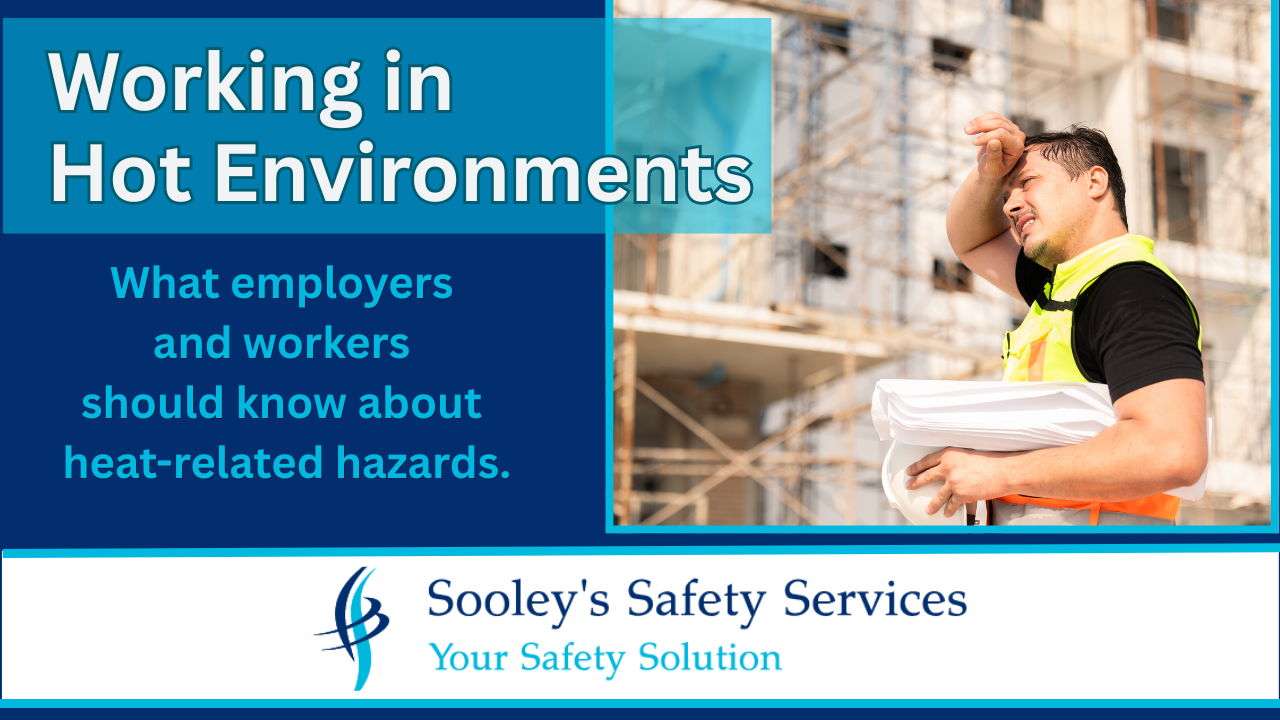
It’s that time of year again. The sun is shining, and everyone is out and about enjoying the beautiful weather. Roadwork, construction, landscaping and other outdoor jobs are in full swing.
Heat is a serious hazard and every year, workers are injured and in some cases killed, because the risks were underestimated or ignored. As an employer, protecting your workers from heat-related illness is not just the right thing to do, it is your legal obligation under the Occupational Health and Safety Act (OHSA).
What Makes Hot Weather Dangerous?
Heat becomes hazardous when high temperature combined with one or more of the following:
- High humidity (especially >50%)
- Direct sunlight and UV exposure
- Physical exertion
- PPE that traps heat
- Indoor radiant heat sources such as ovens, foundries, or commercial kitchens
Most outdoor workers are on the job during peak UV hours, which is between 10:00a.m. and 4:00p.m. The easiest way to determine if you are in the peak period is by looking at your shadow. If your shadow is shorter than you are, you are in the peak period. This is when heat illness and/or injury risk is greatest.
Understanding the Health Risks
Ultraviolet Radiation from the Sun
Excessive UV exposure to the sun’s radiation over the years may lead to premature skin aging, skin cancer, and cataracts. The UV levels are highest in spring and summer between 11:00a.m. and 4:00p.m. On a clear summer day at noon, unprotected fair skin can burn in as little as 15 minutes.
Heat Illness – Know the signs
Heat illness exists on a spectrum from mild discomfort to life-threatening emergency. Early warning signs include:
- Dizziness, fainting, nausea or, headache
- Rapid breathing and heartbeat
- Extreme thirst or dry mouth
- Decreased urination, usually dark yellow in colour
Heat Stress
Working in a hot environment puts stress on your body’s cooling system. Combining this with other stresses such as hard physical work, loss of fluids, fatigue or some medical conditions may lead to heat-related illness, disability and even death.
When your body loses too much sweat through heavy labour or working under hot, humid conditions, you can become dehydrated. If your body does not have enough water to cool itself down, your temperature can rise above 38°c. That is when you can get a heat-related illness, such as heat rash (i.e., plugged sweat glands), heat cramps (i.e., salt loss from sweating), heat exhaustion or heat stroke.
Heat Exhaustion
Heat exhaustion occurs when your body can no longer keep blood flowing both to vital organs and to the skin for cooling. Symptoms include weakness, feeling faint, headache, breathlessness, nausea and vomiting, and difficulty continuing work. Move the worker to a shaded area, loosen clothing, and drink cool water. Recovery takes at least 30 minutes and if not treated quickly, it can lead to heat stroke.
Heat Stroke – A Medical Emergency
Heat stroke is life-threatening. You can die from it. Your body has used up all its water and salt and cannot cool itself. Your temperature rises to dangerous levels, 40°C or more. Symptoms of heat stroke include confusion and irrational behaviour, convulsions or loss of consciousness, and hot, dry skin with no sweating.
If a worker shows signs of heat stroke, call 911 immediately. While waiting for help, cool the worker down as quickly as possible – cool water immersion, a hose, or a wet sheet with rapid fanning. If the worker is unconscious, do not give them anything to drink.
Sunburn
Possible symptoms of sunburn include red, tender skin that is warm or sensitive to the touch, blisters that develop hours or days later. Severe reactions (also called “sun poisoning”), include fever, chills, nausea, rash or peeling skin on sunburned areas.
Treatments for all symptoms are to remove the affected individual from the sun into a cool place, apply cold compresses, remove or loosen clothing, drink fluids and seek medical attention if symptoms are severe. Failure to treat these symptoms can lead to complications, including permanent organ and tissue damage and even unconsciousness, coma or death.
Employer Responsibilities Under the OHSA
Under the Occupational Health and Safety Act (OHSA), employers must take every reasonable precaution to keep workers safe during hot weather, using controls, training, hydration, and modified work practices. Employers must:
- Identify heat hazards in the workplace
- Assess worker heat exposure
- Implement appropriate controls
- Provide information, instruction, and supervision
- Develop heat‑stress procedures and emergency response plans
Ontario uses ACGIH Heat Stress Threshold Limit Values (TLVs) and Wet Bulb Globe Temperature (WBGT) as the practical enforcement standard for determining safe heat exposure levels. Ontario does not set a fixed temperature limit, but heat becomes dangerous around 26–30°C, especially with humidity or physical exertion. Employers must adjust work when conditions exceed safe exposure levels.
Building a Heat Safety Program
A strong heat safety program uses the same hierarchy of controls as any other workplace hazard: eliminate the hazard first, look at ways to reduce it, then protect. No single control is enough. Layering multiple controls is always the most effective approach.
- Engineering Controls
- Air conditioning or mechanical ventilation
- Fans, where safe
- Shade structures for outdoor work areas
- Reduce radiant heat from equipment
- Administrative Controls
- Work/rest cycles based on temperature, humidity, and workload
- Schedule heavy tasks for cooler parts of the day
- Rotate workers to limit individual heat exposure
- Implement acclimatization programs for new or returning workers
- Use a buddy system to monitor for early symptoms
- Hydration & Cooling
- Provide cool drinking water at all times
- Encourage workers to drink every 15–20 minutes
- Offer electrolyte beverages during periods of heavy sweating
- Ensure access to shaded, cool rest areas
- PPE & Clothing
- Lightweight, breathable clothing
- Cooling vests or bandanas
- Avoid impermeable PPE unless absolutely required
- Training and Review
- Conduct daily heat stress risk assessments
- Monitor Environment Canada heat warnings and humidex alerts
- Train all workers to recognize and report symptoms
- Ensure supervisors know emergency response procedures
- Document all controls, adjustments, and incidents
Final Thoughts
Heat-related illness is preventable. With the right controls, proper training, and a culture that takes heat seriously, employers can protect their workers and avoid tragedies that should never happen.
REMEMBER – PREVENTION IS BETTER THAN REACTION! Don’t wait for a worker to collapse before you take action. Plan ahead, monitor conditions, and act early.
Need Help Setting Up Your Heat Safety Program?
If you need assistance developing, reviewing, or implementing a heat safety program for your workplace, I would be happy to help you. For more information, please contact me today.