

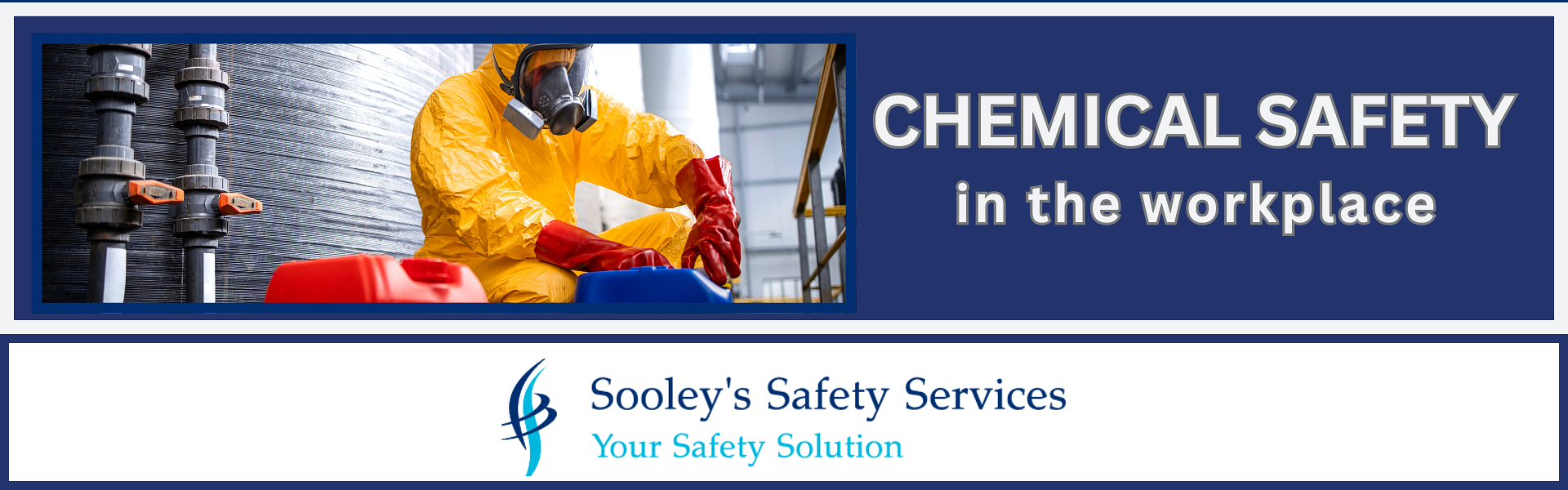
Chemical safety is a core responsibility for every Ontario employer, regardless of industry. From cleaning products and fuels to industrial solvents, welding fumes, and laboratory chemicals, nearly every workplace contains chemicals that can pose risks to worker health and safety.
Legal Framework for Chemical Safety in Ontario
Chemical safety in Ontario is regulated through several interconnected laws and regulations under the Ontario Occupational Health and Safety Act (OHSA). The framework ensures hazardous materials are properly identified, handled, stored, controlled, and monitored to help prevent occupational illness and injury.
Occupational Health and Safety Act (OHSA)
Part IV of the OHSA addresses toxic substances, defined as biological, chemical, or physical agents that may endanger worker health. The Act requires employers to control worker exposure and ensure hazardous substances are clearly identified with adequate information, instruction and training.
Designated Substances (O. Reg. 490/09)
Ontario has identified 11 designated substances, including asbestos, lead, mercury, and arsenic. These substances have strict requirements related to assessment, exposure control, safe handling and removal.
Asbestos-Specific Regulation (O. Reg. 278/05)
Asbestos-related work in construction, building operations,, and repair work is governed by its own regulation, including requirements for identification, notification, and safe handling.
Regulation 833: Control of Exposure to Biological or Chemical Agents
Regulation 833 sets Ontario-specific occupational exposure limits (OELs) for 725 chemical and biological agents. Employers must ensure worker exposure remains below allowable limits and must implement engineering, administrative, and personal protective equipment (PPE) controls as needed.
Key Employer Responsibilities
Identify and Assess Chemical Hazards
Employers must determine whether workers may be exposed to hazardous agents and assess whether those exposures could exceed OELs. This often requires occupational hygiene assessments, including air monitoring.
If exposure data is outdated (e.g., last testing was 10 years ago), or unavailable, Ministry inspectors may order new testing at the employer’s expense.
Implement Controls to Reduce Exposure
Ontario workplaces are expected to follow the hierarchy of controls when managing chemical hazards:
- Engineering controls (ventilation, isolation, substitution)
- Administrative controls (procedures, scheduling, restricted access)
- Personal protective equipment (PPE) as a last line of defence
Regulation 833 requires employers to keep exposures at or below OELs and to prevent exceedances of TWA, STEL, and ceiling limits.
WHMIS 2015 Compliance (O. Reg. 860)
Ontario workplaces must fully comply with the Workplace Hazardous Materials Information System (WHMIS), including:
- Proper supplier and workplace labels
- Up-to-date Safety Data Sheets (SDSs)
- Worker education and training
MLITSD inspectors actively check WHMIS compliance, training records, and documentation during ongoing inspection campaigns.
Safe Storage and Handling
Employers must ensure chemicals are stored and handled according to:
- SDS requirements
- Fire and explosion prevention requirements
- Chemical compatibility rules
- Applicable fuel and compressed gas storage regulations
Improper storage can create significant fire, explosion, health, and environmental hazards.
Emergency Preparedness
Workplaces should also have procedures and equipment in place to respond to chemical-related emergencies, including:
- Spill response procedures
- Emergency eyewash and shower stations, where required
- First aid measures aligned with SDS recommendations
- Incident reporting and investigation procedures
Current Ontario Inspection Priorities (2025–2026)
Ontario’s Ministry of Labour, Immigration, Training and Skills Development (MLITSD) has extended two major inspection campaigns through March 31, 2026:
Worker Exposure to Chemical Agents
Inspectors are verifying:
- Compliance with Regulation 833
- Evidence of exposure assessments
- Adequacy of engineering controls
- Air monitoring records
- Use of PPE where required
If exposure levels cannot be demonstrated to be below OELs, inspectors may order immediate testing.
WHMIS Training and Documentation
Inspectors are checking:
- Worker training records
- Updated SDSs
- Proper labeling
- Safe handling procedures
Chemical exposure remains a leading cause of occupational disease, which accounts for 69% of allowed fatality claims in Ontario between 2020 – 2024.
Understanding Chemical Hazards
The Canadian Centre for Occupational Health and Safety (CCOHS) emphasizes that chemicals can harm workers through:
- Inhalation
- Skin or eye contact
- Ingestion
- Injection or puncture exposure.
The severity of health effects depends on factors such as toxicity, exposure duration, dose, and frequency of exposure.
WHMIS helps employers and workers better understand these hazards through standardized classifications, labels and communication.
Building an Effective Chemical Safety Program
An effective chemical safety program in Ontario should include the following components:
Inventory and Classification
- Maintain a complete up-to-date chemical inventory
- Ensure all products are properly classified under WHMIS
Risk Assessment
- Review SDSs regularly
- Conduct exposure assessments, where required
- Identify designated substances and high-risk materials
Control Measures
- Implement engineering and administrative controls
- Provide and maintain appropriate PPE
- Inspect and maintain ventilation systems regularly
Training and Competency
- Provide WHMIS training for all affected workers
- Provide job-specific chemical handling training
- Annual training refreshers and competency checks
Documentation and Recordkeeping
- Maintain SDS library
- Air monitoring results
- Keep training and inspection records
- Document monitoring results and incident investigations
Emergency Response
- Maintain spill kits and containment
- Eyewash and shower stations
- Clear evacuation and reporting procedures
- Train workers on response expectations
Final Thoughts
Chemical safety is not optional. It is both a legal requirement and an essential part of protecting worker health and safety.
By identifying hazards, controlling exposures, maintain WHMIS compliance, and ensuring workers receive proper training, employers can significantly reduce the risk of occupational illness and injury in the workplace.
A well‑developed chemical safety program not only ensures compliance but also demonstrates a commitment to creating a safer and healthier workplace for everyone.
REMEMBER – PREVENTION IS BETTER THAN REACTION!
If you require assistance developing, reviewing, implementing, or maintaining your workplace chemical safety program, including WHMIS training and compliance support, I would be happy to assist you.
For more information, please contact me today.